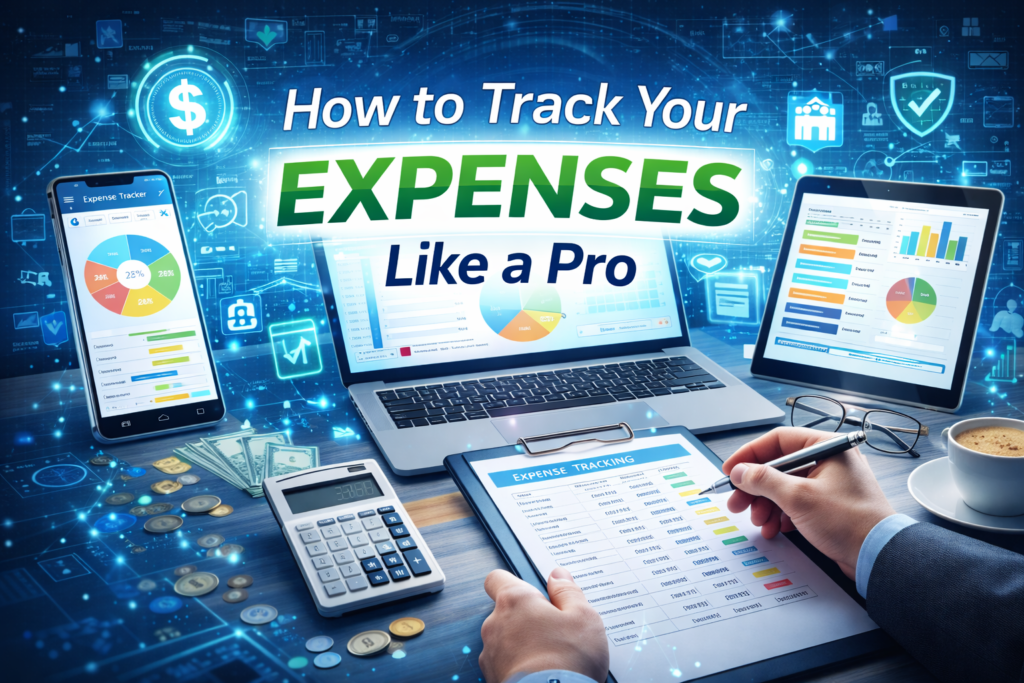
How to Track Your Expenses Like a Pro (Step-by-Step Guide)
If you’ve ever wondered where your money goes each month, you’re not alone. Most people don’t have an income problem— they have a spending visibility problem. The fastest way to fix that is to learn how to track your expenses consistently.
In this guide, you’ll learn a simple, beginner-friendly system to track spending like a pro—without stress, without complex math, and without needing a finance degree. By the end, you’ll have a clear routine you can follow weekly, plus tools and templates to make it easy.
Why Expense Tracking Matters (More Than Budgeting)
Budgeting is planning. Expense tracking is reality. You can’t create a realistic budget until you know what you actually spend. Tracking your expenses helps you:
- Identify hidden money leaks (subscriptions, fees, impulse purchases)
- Stop overspending in problem categories (food delivery, shopping, entertainment)
- Build savings faster by cutting unnecessary spending
- Reduce money stress because you know exactly what’s happening
- Make smarter decisions with confidence
If your goal is to save money fast, tracking expenses is one of the highest-impact habits you can build.
Step 1: Choose Your Expense Tracking Method
There are three main ways to track your expenses. The best one is the one you’ll actually use consistently.
Option A: Budgeting App (Fastest and easiest)
Using an expense tracking app is the easiest method for most people. Apps can automatically sync your bank accounts and categorize spending.
- Best for: beginners, busy people, anyone who wants automation
- Downside: you still must review categories weekly
Popular options include Mint (affiliate) or other budgeting tools that track spending automatically.
Option B: Spreadsheet (Best for control)
A spreadsheet gives you full control and is great if you like seeing everything in one place.
- Best for: detail-focused people who want customization
- Downside: takes more manual work
Option C: Notes App / Journal (Simplest)
If you want the simplest method, write down every purchase in your phone notes.
- Best for: absolute beginners who want to start immediately
- Downside: harder to analyze without summaries
Pro tip: Start with the simplest method for 7 days. You can upgrade later.
Step 2: Set Up Your Categories Like a Pro
The secret to professional expense tracking is using categories that match real life. Don’t create 30 categories. Start with 8–12 simple categories:
- Housing (rent/mortgage, utilities)
- Groceries
- Dining out
- Transportation (gas, public transit)
- Subscriptions
- Shopping
- Health
- Debt payments
- Savings
- Miscellaneous
As you track spending, you’ll quickly see your biggest categories. That’s where your biggest savings opportunities are.
Step 3: Track Every Expense for 14 Days (The “Awareness Sprint”)
If you want to learn how to track your expenses like a pro, commit to a 14-day tracking sprint. This short period builds awareness faster than anything else.
Rules for the sprint:
- Track every purchase immediately (or at least daily).
- Don’t judge yourself—just collect data.
- Record the amount, category, and short note (example: “lunch with friends”).
Most people are shocked by what they find in just two weeks. That’s good—because awareness leads to control.
Step 4: Do a Weekly Money Review (This Is the “Pro” Part)
Tracking expenses isn’t about collecting data forever. The pro move is reviewing it weekly so you can make adjustments. Set a weekly “money date” (10–15 minutes) and ask:
- What did I spend the most on this week?
- Which category went over my limit?
- What can I reduce next week?
- Are there any surprise charges or subscriptions?
- Did I move money into savings?
This routine is what separates random tracking from professional money management.
Step 5: Spot “Money Leaks” and Fix Them
A money leak is a small expense that repeats and adds up. Examples:
- Monthly subscriptions you don’t use
- Delivery fees and tips
- Bank account fees
- Impulse purchases under $20
Here’s a simple challenge: pick one money leak and fix it this week. Cancel one subscription, switch to a cheaper plan, or reduce delivery orders. Small changes create big results over time.
Step 6: Use Spending Limits (Without Feeling Restricted)
Instead of “cutting everything,” pros use spending limits for the categories that matter most. Pick 2–3 categories where you tend to overspend, like dining out or shopping.
Example weekly limits:
- Dining out: $40/week
- Shopping: $25/week
- Entertainment: $20/week
When you see the limit as a game (instead of punishment), budgeting becomes easier. This is a powerful technique for budgeting for beginners.
Step 7: Automate Tracking and Alerts
To make expense tracking effortless, set up:
- Bank notifications for every card purchase
- Low balance alerts
- Bill reminders
- Automatic savings transfers
Automation reduces mistakes and helps you stay consistent. If you prefer app-based tracking, tools like Mint (affiliate) can help you see spending trends automatically.
Step 8: Track Cash Spending (Most People Forget This)
If you use cash, it’s easy to forget those purchases. Pros solve this by:
- Taking a photo of receipts
- Logging cash purchases once per day
- Using a “cash envelope” for one category like dining out
If you ignore cash spending, your expense tracking won’t match reality—so don’t skip this step.
Expense Tracking Template (Copy and Use)
You can copy this simple template into a notes app or spreadsheet:
- Date: ___
- Amount: $___
- Category: ___
- Payment Method: Card / Cash
- Note: ___
If you do this daily for 14 days, you’ll have enough data to create a strong monthly budget.
Common Mistakes Beginners Make (And How to Avoid Them)
Mistake #1: Tracking for 2 days then quitting
Fix: Do a 14-day sprint and keep it simple. Consistency matters more than perfection.
Mistake #2: Too many categories
Fix: Use 8–12 categories. Add more only if needed.
Mistake #3: Not reviewing weekly
Fix: Weekly review is where the “pro” results come from.
Mistake #4: Ignoring subscriptions
Fix: Create a “subscriptions” category and audit it monthly.
FAQ: Tracking Expenses Like a Pro
What is the best way to track expenses?
For most beginners, the best way is using a budgeting app because it automates tracking and reduces manual effort. If you prefer control, use a spreadsheet.
How often should I track my expenses?
Daily tracking is best, but at minimum, review and update your spending at least once per week.
How do I track expenses if my income is irregular?
Track spending the same way. Then build your budget using your lowest expected income as the baseline. Any extra income can go to savings and goals.
Conclusion: Start Simple, Then Improve
Learning how to track your expenses like a pro is one of the best personal finance skills you can build. It gives you control, reduces stress, and helps you save more money without needing a higher income.
Start today with a simple method, track for 14 days, and do a weekly review. You’ll be surprised how quickly your money habits improve.
Related Articles (Internal Links):
- 10 Simple Budgeting Tips for Beginners
- Best Free Budget Apps in 2026
- How to Save $500 Fast Without a Job
Disclosure: Some links may be affiliate links. If you use them, we may earn a commission at no extra cost to you.